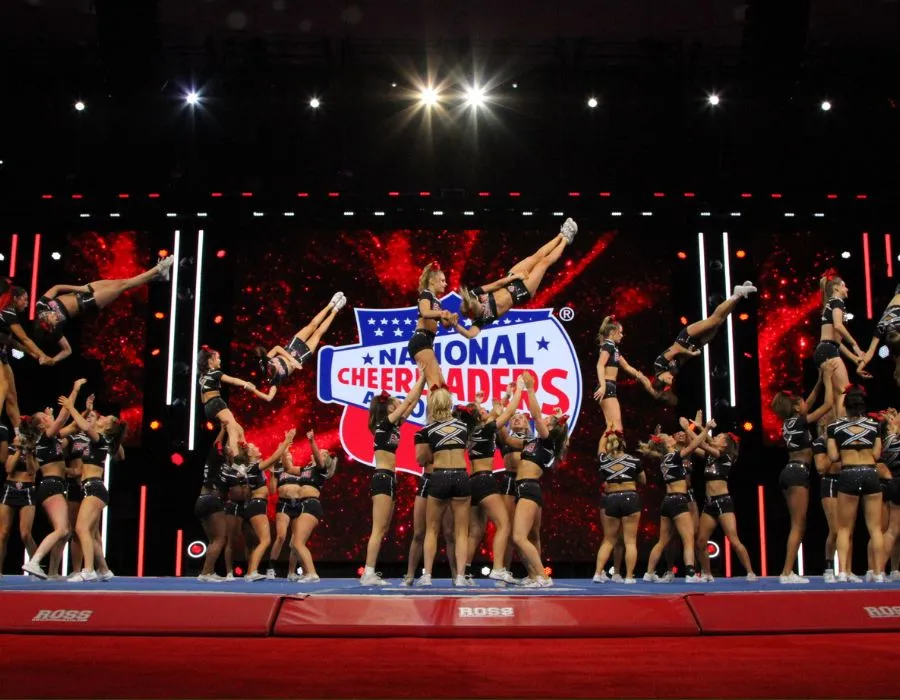
Cheerleading stunts are complex, choreographed physical routines involving acrobatics, lifting, and tossing, designed to showcase strength, balance, and trust.
Common, foundational stunts include prep-level lifts, extensions, libs, and basket tosses, while advanced routines incorporate inversions, pyramids, and high-flying, twisting maneuvers.
Safety is paramount, with strict requirements for mats, skilled spotters, and progressive skill development.
Common Cheerleading Stunt Techniques & Elements
Partner Stunts: Typically two bases lifting one flyer, such as in liberties (libs) or shoulder stands.
Elevator/Prep: The flyer is lifted to shoulder height by bases, often acting as a transition to higher stunts.
Extension: The flyer is held with arms fully extended above the bases' heads.
Basket Tosses: The flyer is propelled high into the air by bases using a "basket" grip.
Pyramids: Interconnected stunts creating a large visual display.
Body Positions: Specific poses held by the flyer while in the air, such as heel stretches, arabesques, bow and arrows, and needles.
Inversions: Skills where the flyer's shoulders are below their waist, such as handstands.
Key Aspects of Stunting
Roles: The flyer (top person), bases (supporting weight), and spotter (ensuring safety) must work in unison.
Levels: Stunts are classified into six levels of difficulty, with regulations for school and all-star teams regarding allowed maneuvers.
Safety: Mandatory use of mats and trained spotters to prevent injuries like concussions or fractures.
STUNT (Sport): A version of competitive cheerleading developed by USA Cheer that removes crowd-leading elements to focus exclusively on technical skills.